Current Issue
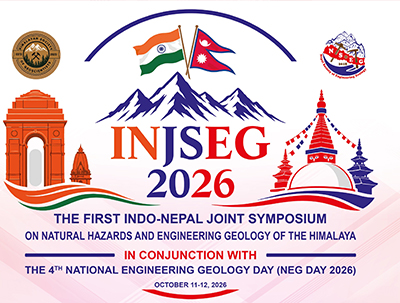
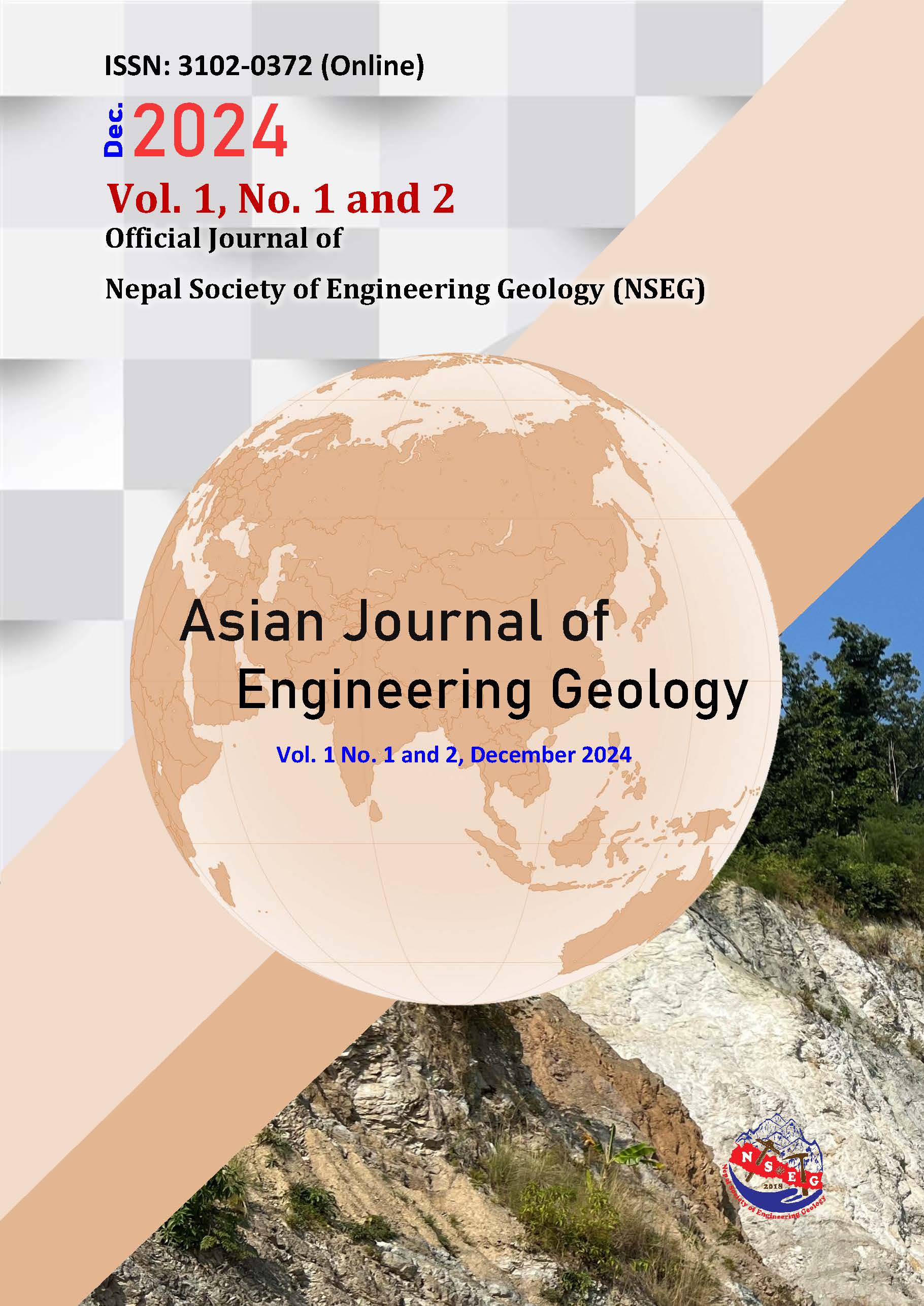
Vol. 3 No. Sp Issue (2026): Extended Abstract Volume of the INJSEG-2026, Asian Journal of Engineering Geology
Extended Abstract Volume of the Indo-Nepal Joint Symposium on Engineering Geology (INJSEG-2026), Kathmandu, Nepal
Published:
2026-10-11
INJSEG 2026 Extended Abstract
The Asian Journal of Engineering Geology (AJEG)
The Asian Journal of Engineering Geology (AJEG), established by the Nepal Society of Engineering Geology (NSEG), aspires to be a dedicated, peer-reviewed platform that advances the understanding and application of engineering geology, with a particular focus on the complex geological settings of Asia, especially the Himalayas, and contributions from other regions of the world. Recognizing the urgent need for knowledge exchange and the dissemination of research findings, AJEG is designed to fill a critical gap in specialized publishing within the field.
Despite notable progress in engineering geology research across Asia, especially in areas prone to natural hazards such as landslides and earthquakes, there remains a scarcity of journals that specifically address the unique challenges and solutions emerging from this region. This lack of specialized outlets limits opportunities for regional researchers to share insights and collaborate across borders. To address this, NSEG is launching AJEG to provide a robust scientific forum for geoscientists, engineers, and environmental researchers.
AJEG aims to serve as a central resource for high-quality research articles, technical papers, and case studies on diverse topics such as slope stability, seismic hazards, landslide dynamics, geotechnical investigations, and the geological considerations of infrastructure development in mountainous and tectonically active regions. The journal especially encourages submissions that highlight interdisciplinary approaches, integrating geological, geotechnical, hydrological, and environmental dimensions.
A core objective of AJEG is to increase regional and international collaboration among researchers, practitioners, and policy-makers. The journal will actively invite contributions from across Asia and beyond, encouraging the exchange of experiences, methodologies, and innovations to address the evolving challenges of engineering geology. It will also promote applied science that supports sustainable development and disaster risk reduction in geologically sensitive areas.
In addition to research articles, AJEG will regularly publish updates on conferences, workshops, and technical activities organized by NSEG. This will help the journal function not only as a scholarly publication but also as a dynamic communication hub for the engineering geology community in Nepal and the wider Asian region.
By bridging scientific knowledge and practical application, AJEG endeavors to become a leading voice in engineering geology and a catalyst for research-driven solutions to geohazards and infrastructure resilience throughout Asia and other geologically diverse regions of the world.